
Quality Assurance & Quality Control
Advanced Testing Facilities
At SREX Composites Pvt. Ltd., quality is not limited to final inspection. It is integrated into every stage of manufacturing, from raw material verification to final mechanical performance validation. Our dedicated Quality Assurance system is designed to ensure that every FRP/GRP product manufactured by us delivers consistent structural integrity, corrosion resistance, dimensional accuracy, and long-term operational reliability.
We follow stringent international standards, controlled manufacturing procedures, and advanced laboratory testing methods to validate the performance of our composite products for highly demanding industrial applications across chemical processing, water treatment, desalination, power, oil & gas, infrastructure, and process industries.
Our in-house testing and inspection capabilities enable us to monitor raw materials, validate laminate construction, verify bonding quality, and evaluate the mechanical behaviour of FRP/GRP systems under actual service-simulated conditions. Every testing activity is carried out using calibrated instruments and standardized testing procedures to ensure compliance with international engineering specifications and customer requirements.
The following advanced testing facilities form an integral part of our Quality Assurance program
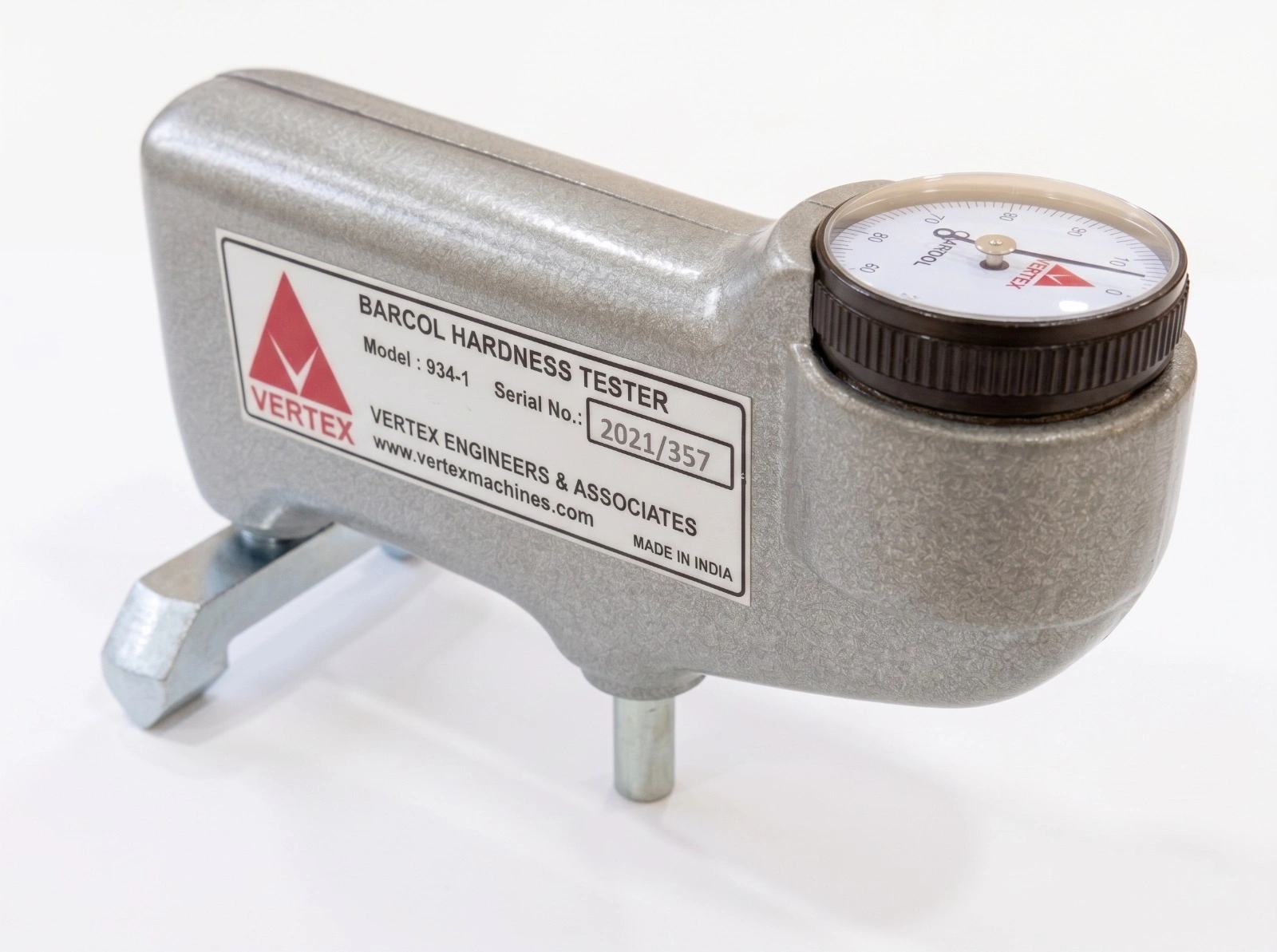
Precision Barcol Hardness Testing as per ASTM D2583
At SREX Composites Pvt. Ltd., we ensure the highest quality standards for our FRP/GRP products through advanced testing and inspection methods. One of the important quality control tests carried out in our laboratory is the Barcol Hardness Test as per ASTM D2583, using a precision Barcol Hardness Tester.
The Barcol Hardness Test is a quick and reliable method used to measure the surface hardness and degree of cure of reinforced plastics and composite laminates. This test helps us verify the mechanical integrity, curing quality, and consistency of our FRP/GRP products during and after manufacturing.
By performing hardness evaluation in accordance with ASTM D2583, we ensure that our composite products achieve the required structural performance, chemical resistance, and long-term durability for demanding industrial applications. The test also assists in maintaining strict compliance with international quality standards and customer specifications.
Our commitment to rigorous quality assurance reflects our dedication to delivering reliable, high-performance FRP/GRP solutions for global industries.
Advanced Glass Content Analysis as per ASTM D2584
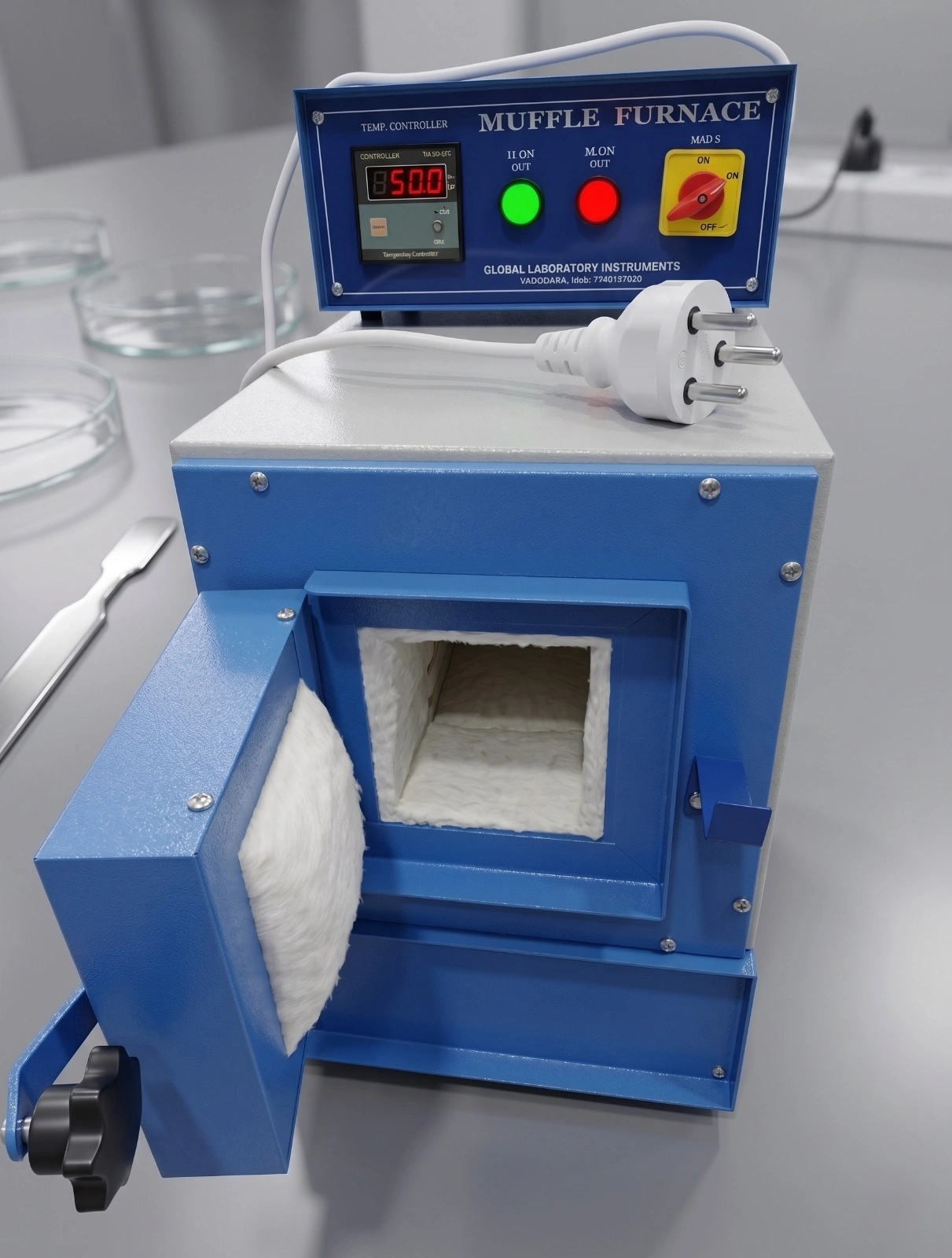
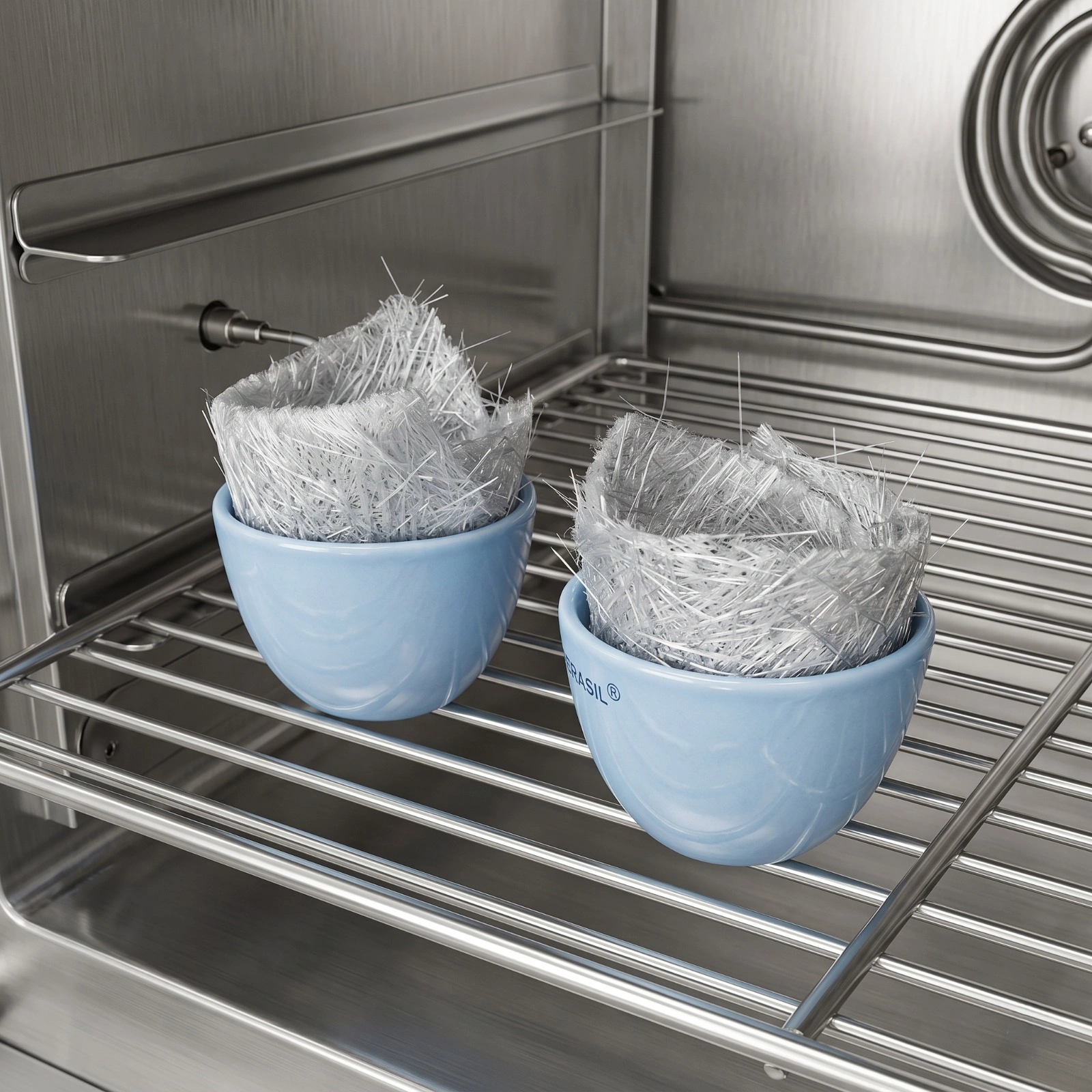
At SREX Composites Pvt. Ltd., we maintain strict quality assurance practices to ensure the structural reliability and long-term performance of our FRP/GRP products. One of the critical quality control evaluations carried out in our laboratory is the Glass Content Test as per ASTM D2584 using a precision Muffle Furnace.
This test method is used to determine the resin and glass reinforcement content in cured composite materials through controlled ignition loss analysis. During the test, the FRP/GRP sample is heated in a high-temperature muffle furnace, where the resin content is burned off, leaving behind the glass reinforcement for accurate measurement.
The Glass Content Test helps us verify the reinforcement ratio, laminate consistency, and manufacturing quality of our composite products. Maintaining the correct glass-to-resin proportion is essential for achieving the required mechanical strength, corrosion resistance, and durability in demanding industrial applications.
By conducting testing in accordance with ASTM D2584, we ensure that every FRP/GRP product delivered by SREX Composites meets stringent international quality standards and customer performance expectations.
Advanced Loss on Ignition (LOI) Testing as per ASTM D2584
At SREX Composites Pvt. Ltd., we follow stringent quality assurance procedures to ensure the consistency and performance of our FRP/GRP products. One of the key laboratory evaluations conducted is the Loss on Ignition (LOI) Test as per ASTM D2584 for determining the resin and glass reinforcement content in cured composite laminates.
The Loss on Ignition Test is performed by heating a composite specimen under controlled high-temperature conditions until the resin matrix is completely burned off, leaving behind the glass reinforcement. This process enables accurate evaluation of the glass-to-resin ratio, which is a critical factor influencing the mechanical strength, corrosion resistance, and durability of FRP/GRP products.
By conducting LOI testing in accordance with ASTM D2584, we ensure uniform laminate construction, controlled manufacturing quality, and compliance with international engineering standards. This testing process helps us maintain consistent product reliability for demanding industrial applications across global markets.
Our commitment to advanced quality testing reflects our dedication to delivering high-performance composite solutions with dependable long-term service life.
Advanced Resin Density Verification as per IS 6746
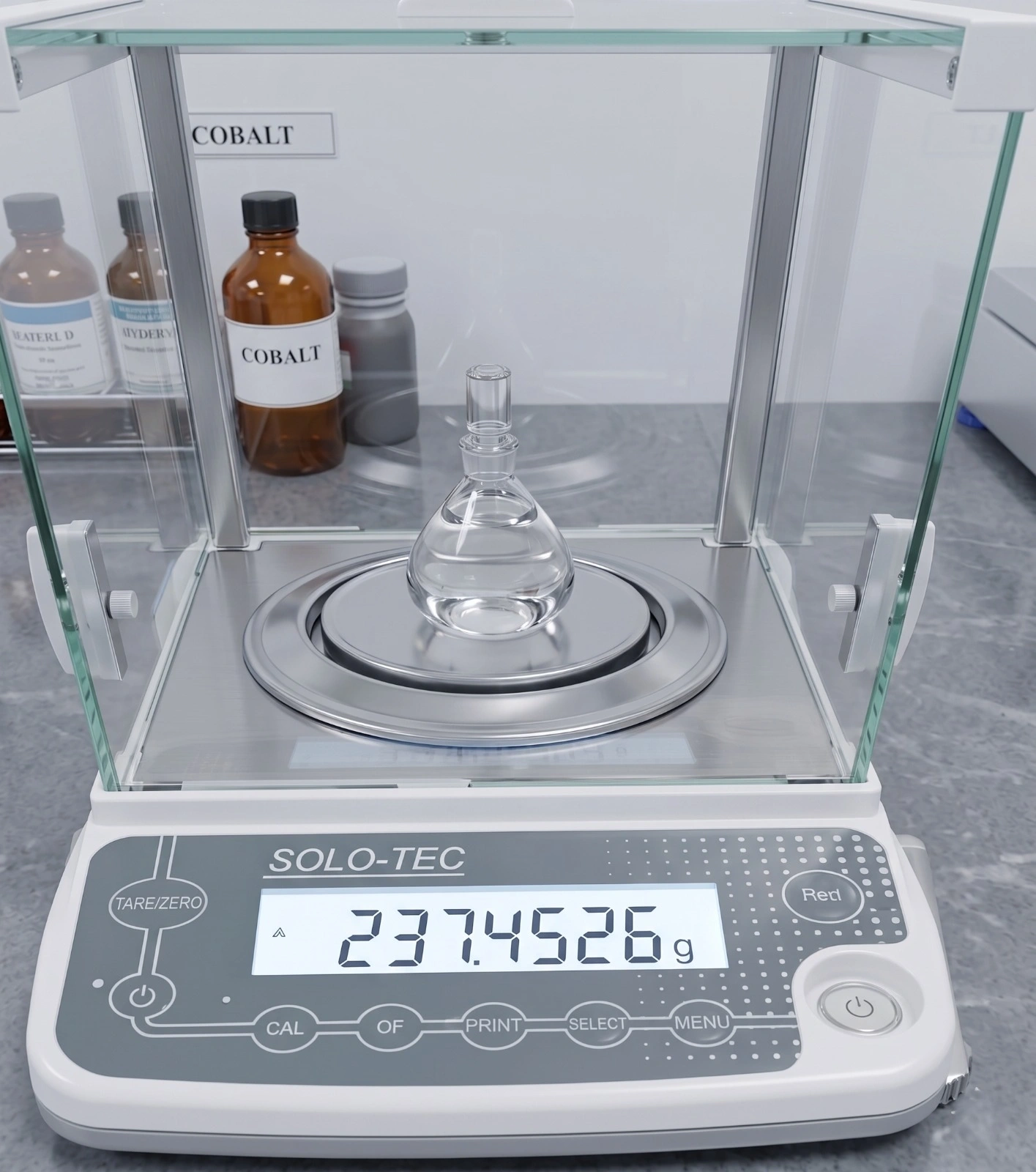
At SREX Composites Pvt. Ltd., we maintain strict quality control procedures to ensure the consistency, reliability, and performance of our FRP/GRP products. One of the important quality assurance evaluations carried out in our laboratory is Resin Density Check as per IS 6746 for Unsaturated Polyester Resin Systems.
Resin density testing is performed to verify the uniformity and composition consistency of unsaturated polyester resin systems used in composite manufacturing. Accurate resin density plays a critical role in achieving proper curing behaviour, reinforcement wet-out, mechanical strength, corrosion resistance, and dimensional stability of FRP/GRP products.
Using precision laboratory weighing and density measurement equipment, we carefully monitor resin properties before production to ensure compliance with specified quality standards and manufacturing parameters. This process helps us maintain batch-to-batch consistency and ensures dependable performance of our composite products in demanding industrial applications.
By conducting Resin Density Checks in accordance with IS 6746, SREX Composites reinforces its commitment to delivering high-quality, reliable, and internationally compliant FRP/GRP solutions for global industries.
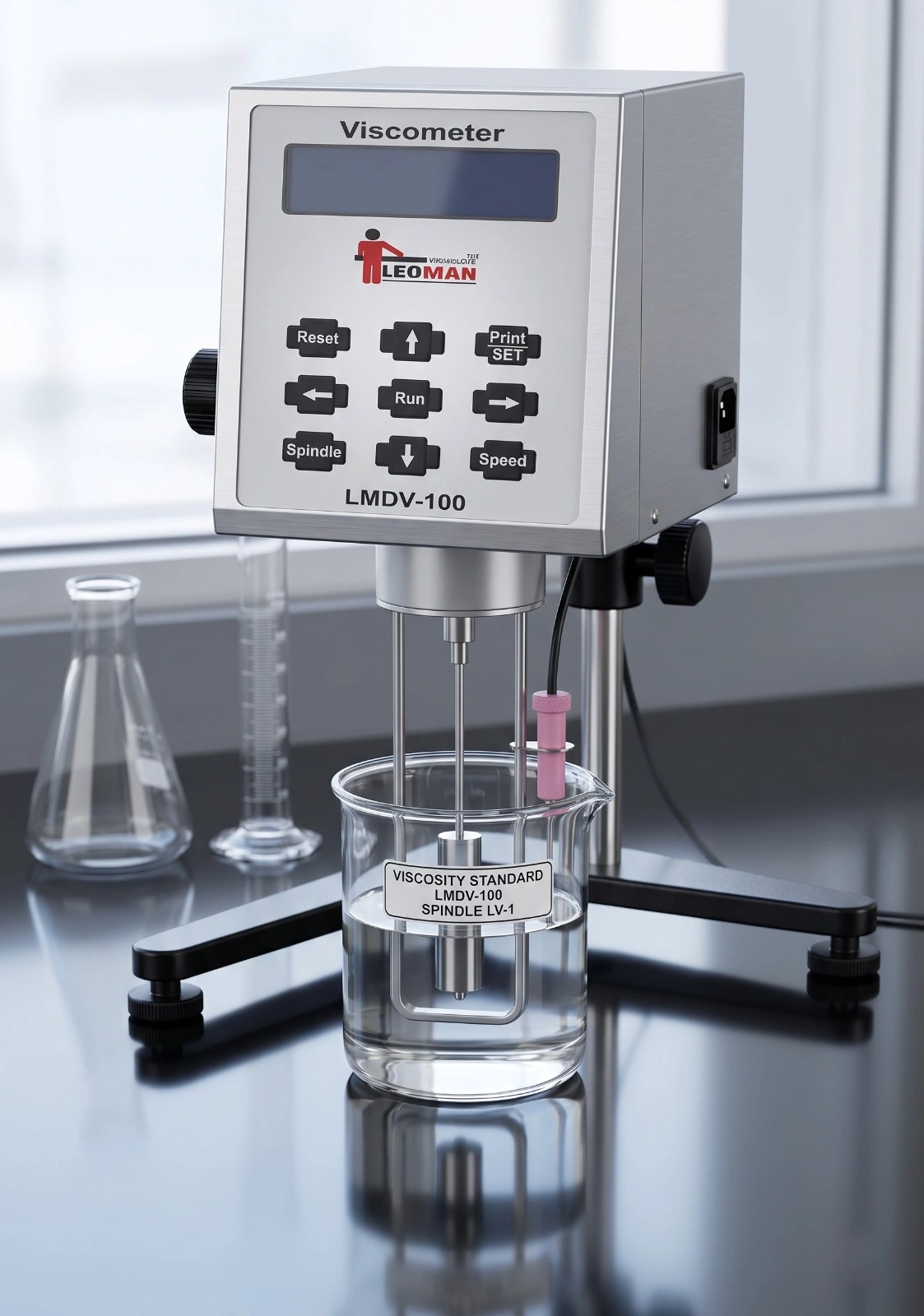
Advanced Viscosity Analysis as per IS 6746
At SREX Composites Pvt. Ltd., we follow advanced quality assurance practices to ensure the consistency and performance of our FRP/GRP products. One of the critical quality control evaluations performed in our laboratory is Resin Viscosity Testing using a precision Viscometer in accordance with IS 6746 for Unsaturated Polyester Resin Systems.
Viscosity testing is essential for evaluating the flow characteristics and processing behaviour of polyester resins used in composite manufacturing. Proper resin viscosity ensures uniform glass fiber wet-out, controlled impregnation, smooth application, and consistent laminate formation during the manufacturing process.
Using precision viscosity measurement equipment, we carefully monitor resin properties to maintain optimum processing conditions and ensure batch-to-batch consistency. Accurate viscosity control directly contributes to improved mechanical strength, dimensional stability, corrosion resistance, and overall product reliability of FRP/GRP components.
By conducting viscosity verification in compliance with IS 6746, SREX Composites ensures superior manufacturing quality, dependable product performance, and adherence to stringent international quality standards for demanding industrial applications.
Advanced Spark Testing for Thermoplastic Weld Integrity as per DVS 2206-4
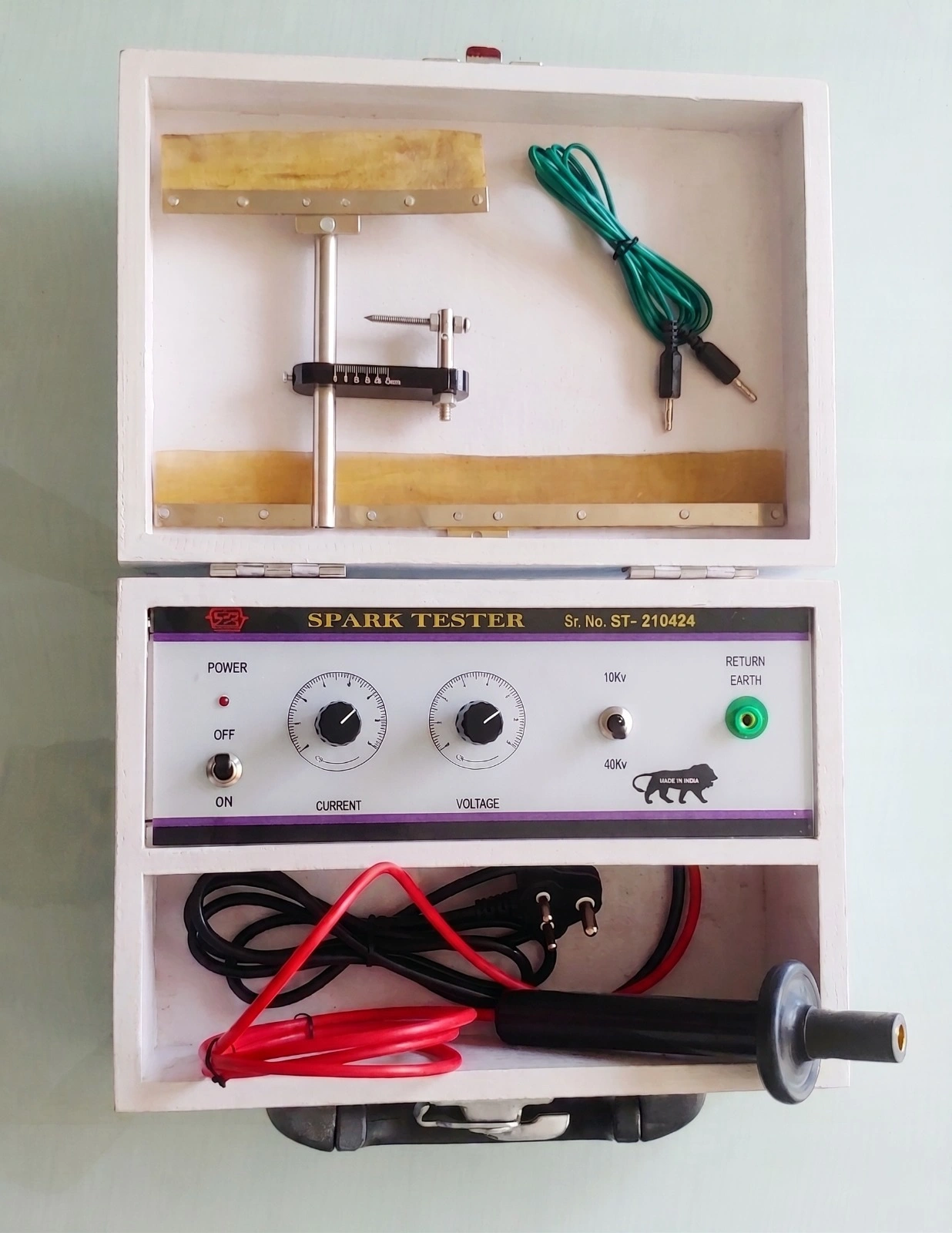
At SREX Composites Pvt. Ltd., we are committed to ensuring the highest level of quality, safety, and reliability in our Pure Thermoplastic and Thermoplastic Lined FRP/GRP products. One of the critical non-destructive quality inspections performed in our facility is Spark Testing as per DVS 2206-4 for thermoplastic tanks, piping systems, and thermoplastic welded joints.
Spark Testing is a high-voltage inspection method used to detect pinholes, pores, cracks, and discontinuities in thermoplastic linings and welded joints without damaging the component. During the test, controlled electrical high voltage is applied across the surface using a specialized spark testing device. Any defect or discontinuity in the lining or weld area produces a visible and audible spark indication, enabling accurate defect identification.
This testing process plays a vital role in verifying the integrity and leak-tightness of thermoplastic welds and corrosion-resistant lining systems used in aggressive chemical service environments. By conducting Spark Testing in accordance with DVS 2206-4, we ensure dependable weld quality, enhanced operational safety, and long-term corrosion protection performance of our products.
Our advanced non-destructive testing capabilities reflect SREX Composites’ commitment to delivering internationally compliant, high-performance thermoplastic and composite solutions trusted across critical industrial applications.
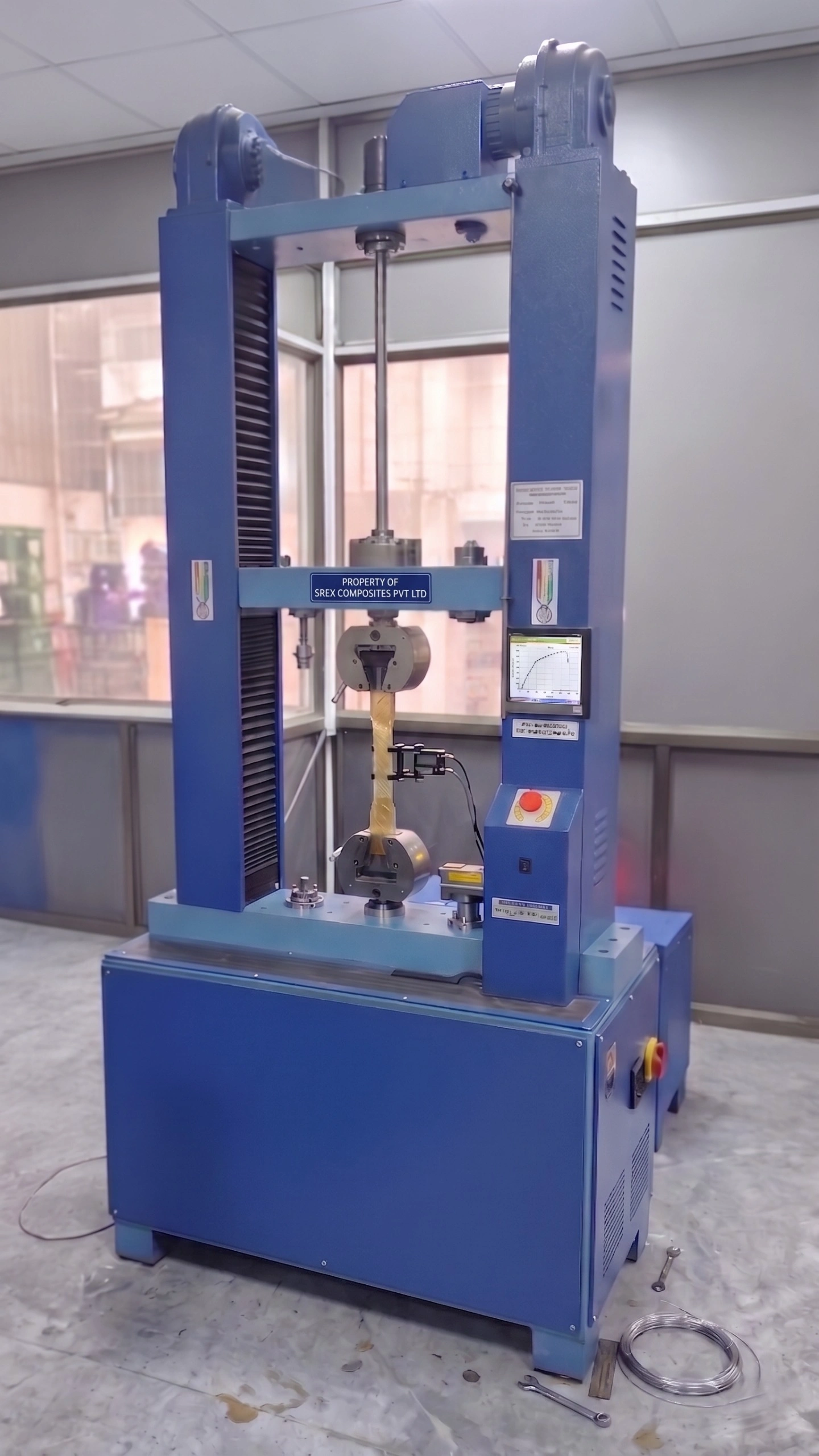
Universal Testing Machine (UTM) for Advanced Mechanical Performance Validation
At SREX Composites Pvt. Ltd., we are committed to delivering FRP/GRP products that meet the highest standards of strength, reliability, and long-term performance. Our state-of-the-art Universal Testing Machine (UTM) plays a vital role in our quality assurance and material validation processes by evaluating the mechanical properties of composite products under controlled testing conditions.
The UTM is used to perform a wide range of critical mechanical tests including Tensile Test, Hoop Tensile Test, Compression Test, Lap Shear Test, and other structural performance evaluations for FRP/GRP components. These tests help us accurately determine material strength, load-bearing capacity, bonding integrity, deformation characteristics, and overall structural behaviour of composite products.
Through rigorous testing and precise data analysis, we ensure that every product manufactured by SREX Composites complies with stringent international standards, engineering specifications, and customer requirements. The testing process also enables us to validate product durability, operational safety, and performance consistency for demanding industrial applications.
Our advanced testing infrastructure reflects our strong commitment to quality, innovation, and delivering high-performance FRP/GRP solutions trusted by industries worldwide.
Quality Assurance & Composite Performance Validation
Engineered Reliability Through Advanced ASTM & International Standard Testing
At SREX Composites Pvt. Ltd., quality is engineered through precision testing, process control, and continuous validation. Our advanced QA practices ensure every FRP/GRP product meets international standards for strength, durability, and long-term industrial performance.
Axial Tensile Strength Test of FRP/GRP Composites as per ASTM D3039
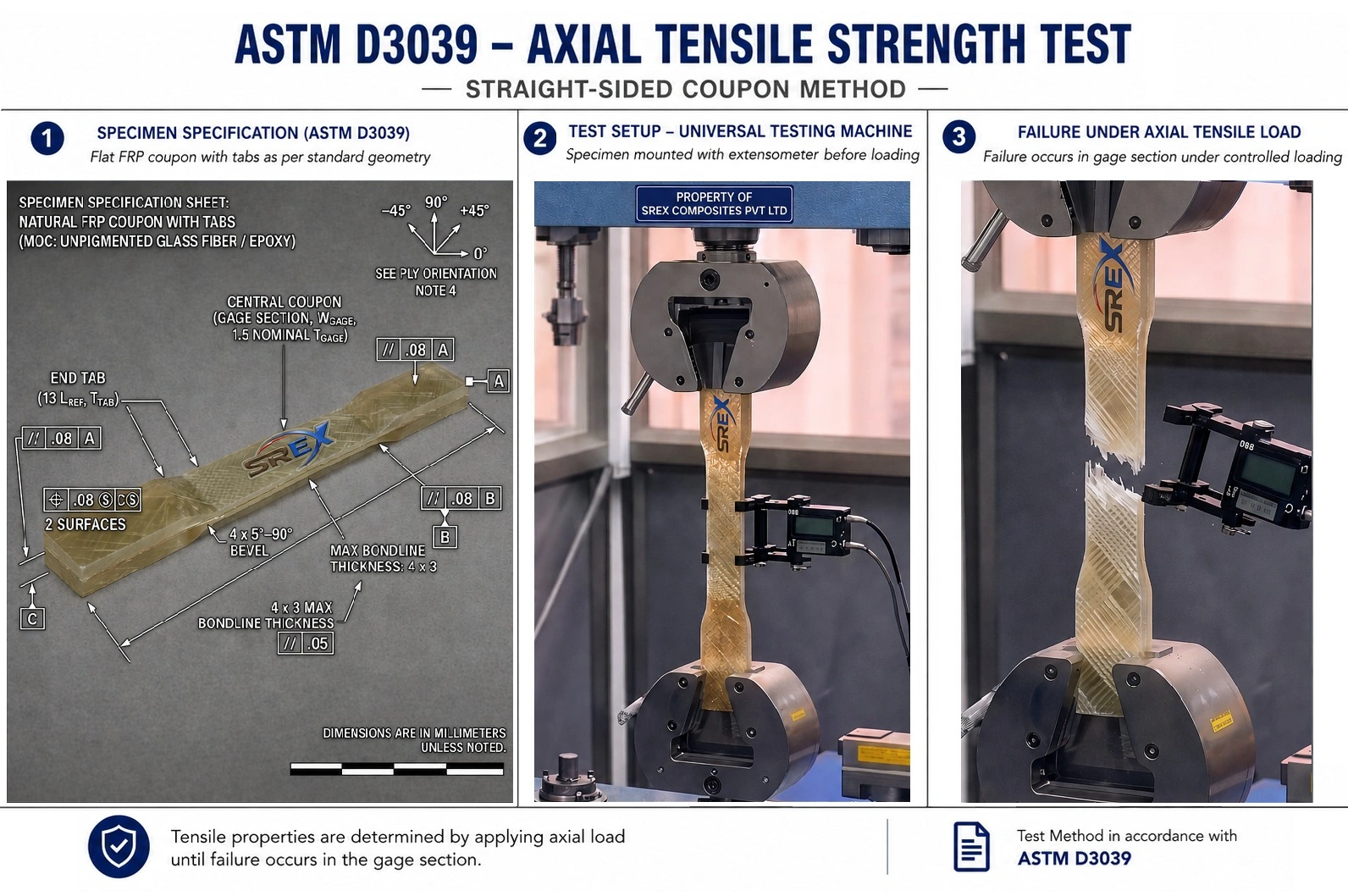
At SREX Composites Pvt Ltd, we perform Axial Tensile Strength Testing in accordance with internationally recognized ASTM D3039 standards to evaluate the tensile behaviour and structural integrity of FRP/GRP composite materials under controlled axial loading conditions. This test plays a critical role in validating the mechanical performance, load-bearing capability, and reliability of composite laminates used in demanding industrial applications.
The ASTM D3039 test method is specifically designed for Polymer Matrix Composite Materials reinforced with high-strength fibers such as Glass Fiber Reinforced Plastic (GRP) and Fiber Reinforced Plastic (FRP). The test determines the in-plane tensile properties of composite laminates by applying a continuously increasing axial tensile force until specimen failure occurs within the gauge section.
This test is conducted to determine critical tensile properties of FRP/GRP laminates, including:
- Ultimate Tensile Strength
- Tensile Modulus of Elasticity
- Ultimate Tensile Strain
- Elongation Characteristics
- Load Carrying Capacity
- Laminate Structural Performance
- Failure Behavior Under Axial Stress
According to ASTM D3039, the tensile properties generated through this method are extensively used for:
- Material qualification
- Product design validation
- Engineering analysis
- Quality assurance
- Research & development
- Structural performance verification
The ASTM D3039 axial tensile test is performed using a calibrated Universal Testing Machine (UTM) equipped with precision grips and extensometers. A flat FRP/GRP coupon specimen with defined geometry is prepared as per standard dimensions and mounted carefully into the testing machine.
The specimen is then subjected to controlled axial tensile loading until rupture occurs. During the test, the system continuously records:
- Applied tensile load
- Tensile stress
- Strain response
- Elongation
- Modulus behaviour
- Failure point and failure mode
The extensometer attached to the specimen accurately measures strain development throughout the loading cycle, ensuring highly precise stress-strain data generation.
For industrial FRP/GRP equipment, piping systems, vessels, ducts, scrubbers, and structural components, tensile strength is one of the most critical mechanical properties. ASTM D3039 testing ensures that composite laminates can withstand operational tensile stresses encountered during:
- Internal pressure loading
- Thermal expansion
- Mechanical handling
- Structural support conditions
- Transportation and installation
- Long-term service environments
This testing helps verify laminate quality, fiber orientation efficiency, resin bonding performance, and manufacturing consistency. It also confirms that the composite structure meets project specifications and international engineering standards.
At SREX Composites Pvt Ltd, all tensile testing activities are conducted under controlled quality procedures using calibrated testing instruments and standardized specimen preparation methods. Our testing process focuses on:
- Accurate laminate evaluation
- Controlled specimen preparation
- Reliable data acquisition
- Failure mode analysis
- International standard compliance
- Consistent product validation
By conducting ASTM D3039 tensile testing, we ensure that our FRP/GRP products deliver dependable mechanical performance, superior structural reliability, and long-term operational safety for highly corrosive and demanding industrial applications.
Our testing methodology aligns with ASTM D3039 requirements for tensile characterization of polymer matrix composite materials, enabling customers to receive technically validated products backed by recognized international testing standards. This reflects our strong commitment toward engineering excellence, quality assurance, and global compliance for advanced composite solutions.
Reference Standard: ASTM D3039/D3039M – Standard Test Method for Tensile Properties of Polymer Matrix Composite Materials.
Hoop Tensile Strength Test (Split Disk Method) as per ASTM D2290
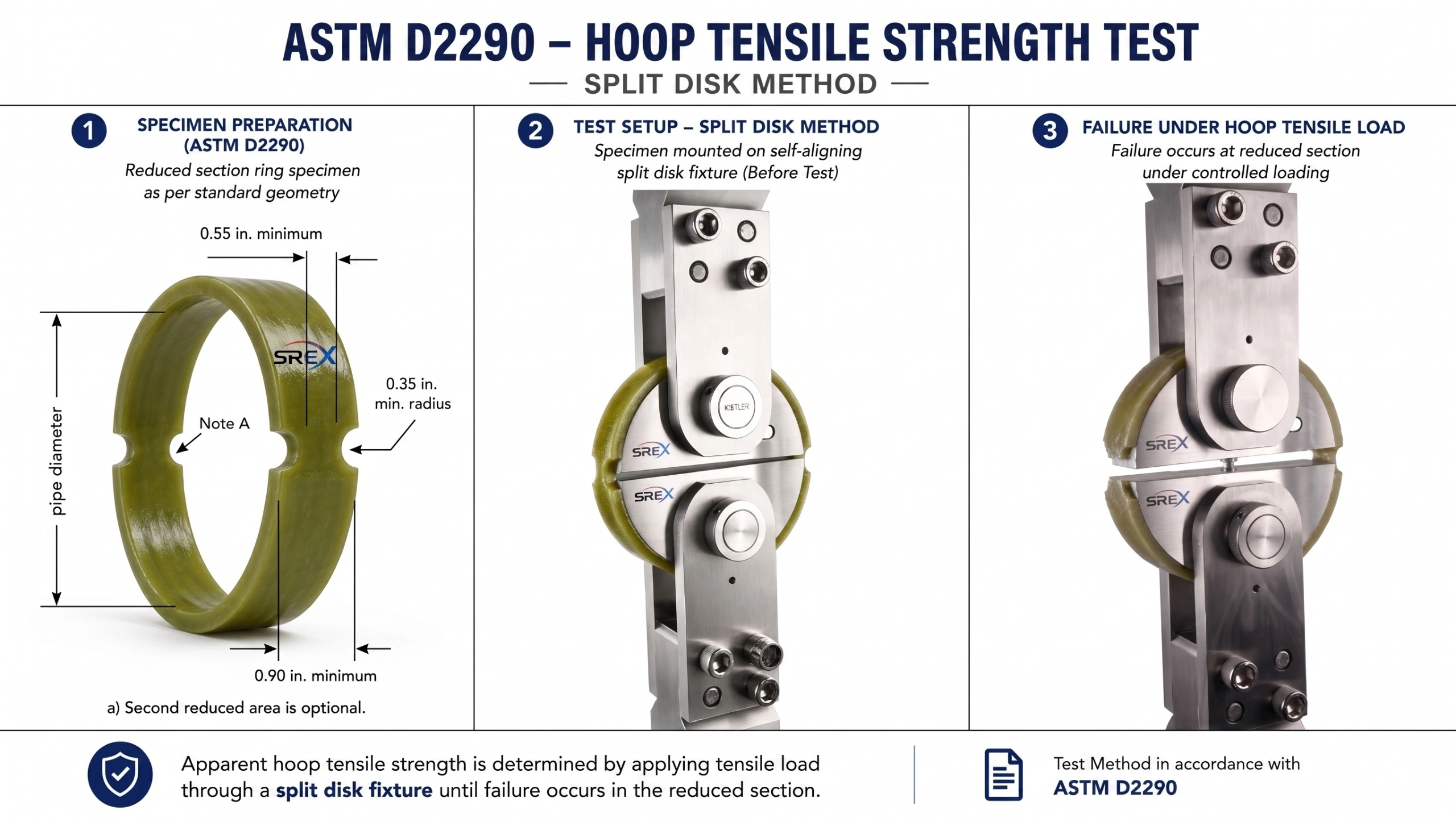
At SREX Composites Pvt. Ltd., the Hoop Tensile Strength Test as per ASTM D2290 is an essential part of our Quality Assurance program for FRP/GRP pipes and piping systems. This test is performed to evaluate the circumferential tensile strength of composite pipes under controlled loading conditions using the Split Disk Method. The test helps verify the structural integrity, reinforcement efficiency, and load-bearing capability of FRP/GRP products used in demanding industrial applications.
The ASTM D2290 test method determines the apparent hoop tensile strength of reinforced plastic pipes by applying tensile force through a self-aligning split disk fixture until failure occurs in the reduced section of the ring specimen. The test simulates hoop stress conditions that FRP/GRP pipes experience during actual service under internal pressure applications.
During the testing process, a precisely machined ring specimen is prepared from the pipe section according to ASTM D2290 standard dimensions. The specimen is mounted on a split disk fixture connected to a Universal Testing Machine (UTM). Tensile load is then applied at a controlled speed until rupture or failure occurs in the reduced section of the specimen. The maximum load carried by the specimen is recorded to calculate the apparent hoop tensile strength of the material.
This testing method provides highly valuable data for:
- Verification of hoop tensile performance of FRP/GRP pipes
- Evaluation of laminate strength and reinforcement quality
- Validation of pipe manufacturing consistency
- Quality control during production
- Compliance with international customer specifications
- Engineering design and pressure application assessment
At SREX Composites, Hoop Tensile Testing is conducted under controlled laboratory conditions using calibrated testing equipment and standard specimen preparation methods to ensure accurate and reliable test results. The test confirms that our FRP/GRP piping systems are capable of withstanding high circumferential stresses encountered in chemical processing, desalination plants, water treatment systems, offshore installations, and other critical industrial environments.
Our commitment to international testing standards such as ASTM D2290 reflects our dedication toward delivering high-performance, durable, and quality-assured FRP/GRP products for global industrial applications.
Reference Standard: ASTM D2290 – Standard Test Method for Apparent Hoop Tensile Strength of Plastic or Reinforced Plastic Pipe by Split Disk Method
Ring Stiffness Test for FRP / GRP Pipes as per ASTM D2412
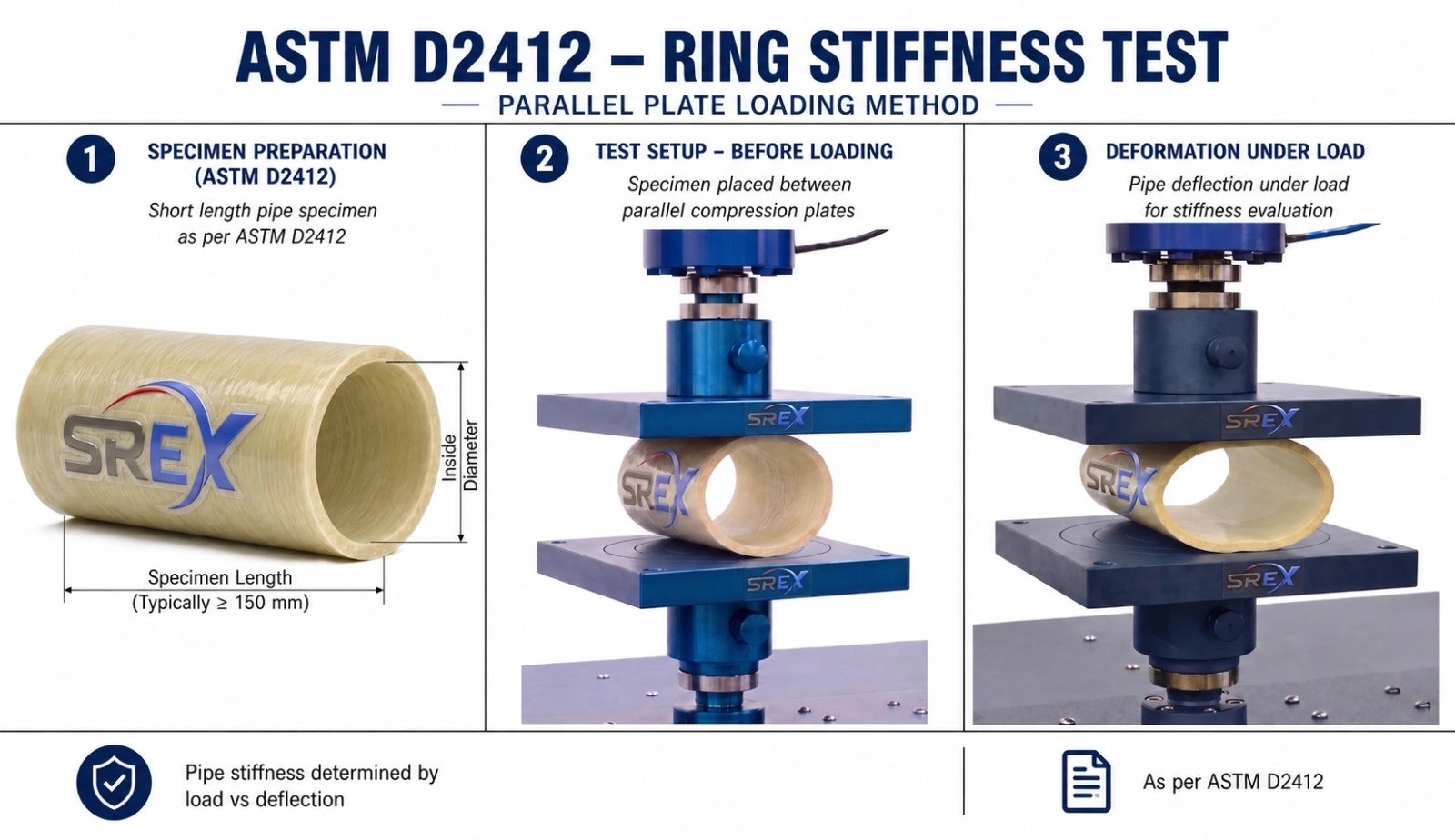
The Ring Stiffness Test as per ASTM D2412 is one of the most important quality verification tests used for evaluating the structural performance of FRP/GRP pipes under external loading conditions. This test determines the ability of a pipe to resist deformation when subjected to compressive loads, ensuring long-term reliability in buried and underground pipeline applications.
At SREX Composites, the ASTM D2412 Ring Stiffness Test is performed as part of our stringent Quality Assurance program to validate the mechanical integrity, stiffness characteristics, and load-bearing performance of our FRP/GRP piping systems manufactured for demanding industrial applications.
The ASTM D2412 standard covers the “Determination of External Loading Characteristics of Plastic Pipe by Parallel-Plate Loading.” During the test, a prepared pipe specimen is positioned between two parallel compression plates and subjected to controlled loading. The load and corresponding pipe deflection are continuously recorded to determine the pipe stiffness and deformation behaviour.
This test is conducted to evaluate:
- Ring stiffness of FRP/GRP pipes
- Resistance to external compressive loads
- Pipe deformation characteristics
- Structural integrity during underground service conditions
- Load vs. deflection performance
- Suitability for buried pipeline applications
The test plays a critical role in ensuring that FRP/GRP piping systems can safely withstand soil loads, traffic loads, installation stresses, and long-term operational conditions without structural failure.
As illustrated in the test sequence:
- Specimen Preparation
A short section of FRP/GRP pipe is prepared according to ASTM D2412 dimensional requirements. The specimen length, inside diameter, and wall thickness are accurately measured before testing.
- Parallel Plate Loading Setup
The pipe specimen is placed horizontally between two rigid parallel compression plates of the testing machine. The setup ensures uniform load distribution across the specimen.
- Controlled Compression Loading
The load is gradually applied at a specified rate while the pipe deflection is continuously monitored. The test records the relationship between applied load and pipe deformation until the required deflection level or failure condition is reached.
The ASTM standard defines the evaluation of pipe stiffness based on load and deflection measurements obtained during the test.
For underground and process piping applications, ring stiffness is a critical design parameter. FRP/GRP pipes must maintain their structural shape under external loads throughout their service life.
The ASTM D2412 Ring Stiffness Test helps verify that the pipe can:
- Resist soil and backfill pressure
- Withstand traffic and surface loads
- Maintain dimensional stability
- Prevent excessive deformation
- Ensure long-term underground performance
- Meet project and international specification requirements
This testing is especially important for:
- Underground water pipelines
- Sewer and drainage systems
- Chemical process piping
- Industrial utility networks
- Desalination projects
- Marine and infrastructure applications
- Oil & gas buried pipelines
At SREX Composites, ASTM D2412 testing is performed using calibrated testing equipment under controlled quality procedures to ensure reliable and repeatable results. Our testing validates that every FRP/GRP piping system meets stringent international quality and performance standards before dispatch.
By conducting Ring Stiffness Testing in accordance with ASTM D2412, we ensure that our composite piping solutions deliver superior structural strength, long-term durability, and dependable field performance even under severe operating and installation conditions.
- High structural reliability
- Excellent resistance to external loading
- Verified underground performance
- Long service life
- Enhanced safety and durability
- Compliance with international testing standards
- Consistent product quality assurance
ASTM D2412 Ring Stiffness Testing demonstrates our commitment to engineering excellence, product reliability, and international quality compliance for high-performance FRP/GRP piping systems.
Reference Standard : ASTM D2412 – Standard Test Method for Determination of External Loading Characteristics of Plastic Pipe by Parallel-Plate Loading
Lap Shear Strength Test as per BS EN 13121-3 (Annex D.8)
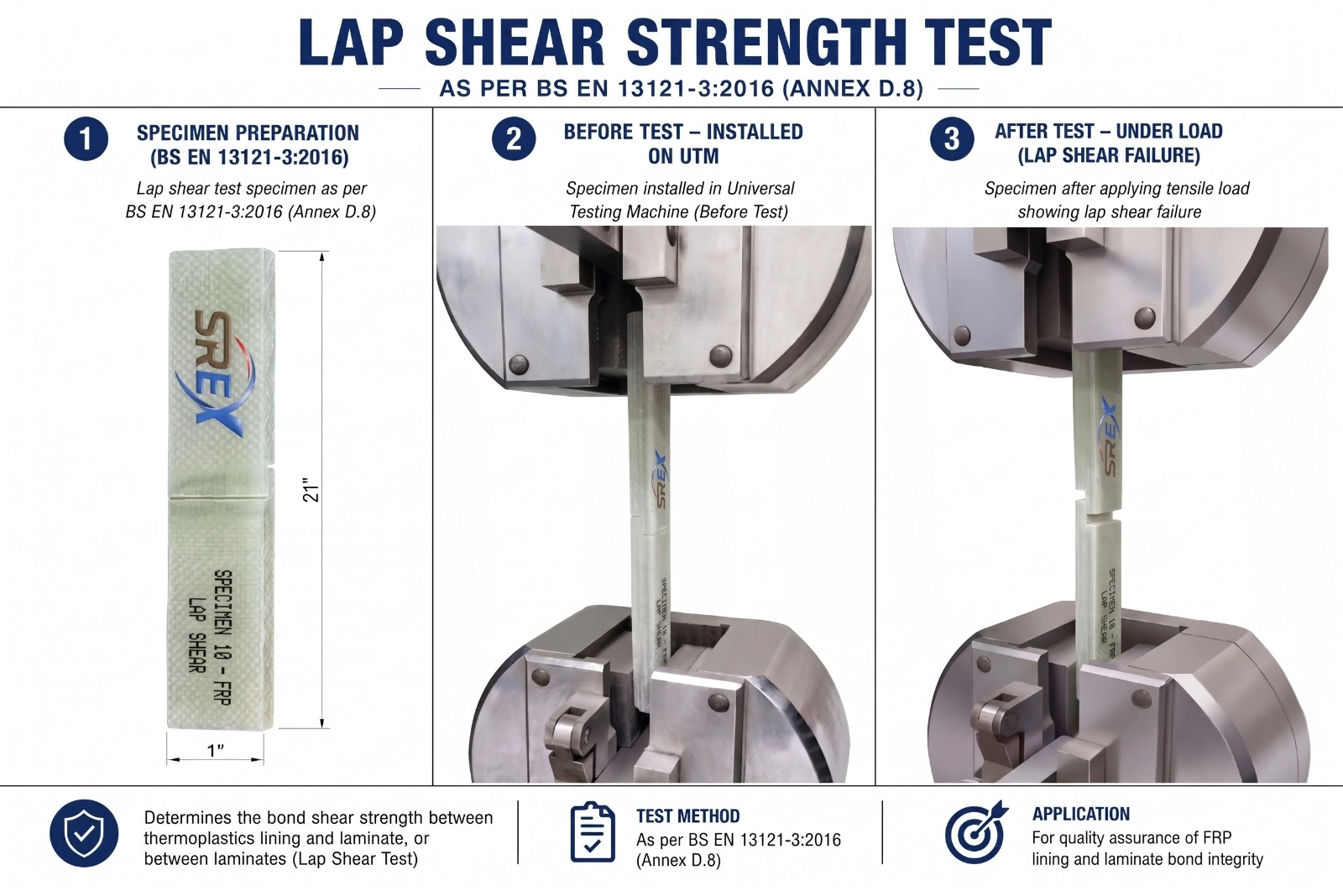
The Lap Shear Strength Test as per BS EN 13121-3 (Annex D.8) is a critical quality assurance test used to evaluate the bond integrity between thermoplastic linings and FRP/GRP laminates, or between laminate layers themselves. This test verifies the adhesive and structural bonding performance of composite systems used in highly corrosive and demanding industrial environments.
At SREX Composites Pvt. Ltd., this test plays a vital role in ensuring the long-term reliability, mechanical stability, and chemical resistance of our FRP/GRP equipment, dual laminate systems, tanks, vessels, piping systems, ducts, and process equipment manufactured for global industrial applications.
The Lap Shear Strength Test determines the shear strength of the bonded interface between:
- Thermoplastic lining and FRP/GRP laminate
- FRP laminate to laminate bonding layers
- Structural bonding areas subjected to mechanical and thermal stresses
The test confirms that the bonding system can withstand operational loads without delamination, separation, or structural failure during service conditions.
As specified in BS EN 13121-3 (Annex D.8), the specimen is prepared from the full thickness of the laminate and lining combination. Thin saw cuts are made symmetrically to create the shear test section, ensuring accurate evaluation of the bond area.
The specimen is then mounted in a Universal Testing Machine (UTM) under axial alignment, where tensile force is applied at a controlled rate of:
(25 ± 6) mm/min
until bond failure occurs.
The maximum load at failure is recorded, and the bond shear strength is calculated in N/mm² based on the effective shear area. The final reported value is obtained from the arithmetic mean of multiple specimens as required by the standard.
In dual laminate construction, the thermoplastic liner provides superior corrosion resistance, while the FRP/GRP laminate delivers structural strength. The reliability of the complete system depends heavily on the bonding quality between these layers.
This test helps ensure:
- Excellent adhesion between liner and structural laminate
- Resistance against delamination under operational stress
- Long-term durability in corrosive chemical environments
- Structural integrity during thermal cycling and pressure loading
- Consistent manufacturing quality and process control
The Lap Shear Strength Test is widely applicable for quality validation of:
- Dual Laminate FRP/GRP Tanks
- Thermoplastic Lined Equipment
- Chemical Storage Tanks
- FRP/GRP Process Vessels
- Corrosion Resistant Piping Systems
- Scrubbers and Process Columns
- Industrial Composite Structures
At SREX Composites Pvt. Ltd., all critical bonding systems are validated through stringent testing procedures in accordance with internationally recognized standards such as BS EN 13121-3. Our advanced quality assurance practices ensure that every FRP/GRP and dual laminate product delivers exceptional bonding performance, operational safety, and long service life even in the most aggressive industrial environments.
The Lap Shear Strength Test is one of the key evaluations that demonstrates our commitment to engineering excellence, process reliability, and global quality standards in composite manufacturing.
Reference Standard: BS EN 13121-3 : D.8 Lap shear strength of bond between thermoplastics lining and laminate or between laminates
Commitment to Quality Excellence
At SREX Composites Pvt. Ltd., our Quality Assurance philosophy is built on engineering precision, internationally compliant testing practices, and continuous process validation. Every FRP/GRP product manufactured by us undergoes rigorous inspection and performance evaluation to ensure superior reliability, operational safety, and long-term service performance.
Our advanced laboratory infrastructure, experienced quality professionals, and commitment to international standards enable us to deliver technically validated composite solutions trusted across global industries.
Through continuous investment in testing technology and quality control systems, SREX Composites remains committed to delivering high-performance FRP/GRP products that meet the most demanding industrial requirements worldwide.
Quality Assurance & Quality Control
At SREX Composites Pvt. Ltd., quality assurance is integrated into every stage of manufacturing, fabrication, inspection, testing, and dispatch across our complete range of FRP/GRP, GRE, thermoplastic, lined, pultruded, moulded, and engineered composite products. Our comprehensive quality management system is designed to ensure structural reliability, corrosion resistance, dimensional accuracy, operational safety, hydraulic efficiency, and long-term performance under demanding industrial operating conditions.
From raw material verification to final dispatch inspection, every product is manufactured under controlled production procedures using qualified fabrication methodologies, documented inspection systems, and application-focused quality standards. Our quality assurance practices are structured to consistently meet project specifications, international codes, and critical operational requirements across chemical, water treatment, power, marine, offshore, infrastructure, and process industries.
Quality control begins with strict incoming inspection and verification of all raw materials used in manufacturing and fabrication processes, including:
- Resin systems and curing agents
- Glass fiber reinforcements and continuous roving
- Catalysts, fillers, and additives
- Thermoplastic liner materials including HDPE, PP, PPH, UPVC, CPVC, PVDF, ECTFE, FEP, and PFA
- Structural inserts, reinforcement components, and accessories
All materials are verified against approved technical datasheets and project specifications before use. Controlled storage conditions are maintained to preserve shelf life, consistency, and material integrity. Complete batch-wise traceability is maintained throughout manufacturing and dispatch stages.
All products are manufactured under defined and monitored process parameters to ensure consistency, repeatability, and long-term service reliability. Depending on product application and design requirements, manufacturing processes include:
- Filament winding
- Contact moulding
- Hand lay-up fabrication
- Pultrusion processes
- Thermoplastic welding and fabrication
- Layer-by-layer laminate build-up
- Controlled curing cycles
- Precision assembly and fit-up verification
Critical process parameters such as laminate thickness, winding angles, glass-to-resin ratio, corrosion barrier formation, curing conditions, and reinforcement placement are continuously monitored during production. Layer-by-layer laminate inspection procedures are implemented during manufacturing to ensure structural consistency and corrosion-resistant laminate construction.
Special attention is given to high-stress zones, nozzle areas, branch connections, flanged joints, support locations, mechanically loaded sections, reinforced collars, lifting points, and structural interfaces.
Only approved thermoplastic materials and qualified welders are utilized for thermoplastic fabrication to ensure weld integrity, fabrication consistency, and long-term service performance.
Comprehensive laminate quality inspection is performed to ensure structural strength, corrosion resistance, erosion resistance, and long-term durability of all composite products. Quality assurance activities include:
- Laminate thickness verification
- Corrosion barrier inspection
- Reinforcement distribution verification
- Structural integrity assessment
- Layer bonding inspection
- Reinforced joint and nozzle verification
- Surface finish evaluation
- Anti-slip surface verification where applicable
- Internal surface smoothness inspection for optimized hydraulic performance
- Adhesion verification for thermoplastic lined systems
Specialized verification is carried out for abrasion-resistant laminates, slurry-duty applications, fire-retardant constructions, electrochemical service environments, corrosive chemical handling systems, and erosion-resistant internal surfaces for slurry transportation applications.
All manufactured products undergo dimensional and visual inspection to ensure compliance with approved drawings, engineering tolerances, and assembly requirements. Inspection activities include verification of:
- Diameter, wall thickness, length, and straightness
- Roundness and ovality
- Flange flatness and bolt-hole alignment
- Branch spacing, alignment, and orientation
- Joint geometry and mating surfaces
- Duct and equipment fitment accuracy
- Weld seam continuity for thermoplastic fabrication
- Surface uniformity and cosmetic finish
- Port geometry and flow symmetry where applicable
Products are visually inspected for defects such as voids, cracks, delamination, dry spots, air entrapment, deformation, fabrication defects, and laminate inconsistencies.
Packaging and handling inspections are also carried out to prevent deformation, dimensional damage, and transit-related distortion during transportation and site delivery.
Extensive testing and validation procedures are performed to ensure reliable field performance under actual operating conditions. Depending on product type and application, quality verification may include:
- Hydrostatic pressure testing
- Leak-tightness testing
- Joint integrity verification
- Ring stiffness and deflection testing
- Spark testing for lined systems and ducts
- Barcol hardness testing
- Structural integrity testing
- Functional sealing verification
- Manual and motorized operational checks
- Dynamic balancing of rotating equipment
- Vibration and alignment inspection
- Noise performance verification
- Flow distribution and hydraulic performance checks
- Filtration element installation verification
- IP protection testing for electrical products
Blowers are tested to verify noise levels below 85 dB measured at 1 meter distance after inlet and outlet duct assembly under specified operating conditions. Dynamic balancing is carried out as per ISO 1940 Grade 6.3, and blower performance trials are verified in accordance with IS 4894:1987 to ensure smooth operation, mechanical stability, and long-term service reliability.
Finished pultruded products are inspected for compliance with specified mechanical strength, dimensional accuracy, and surface quality requirements. Products are additionally evaluated for durability, environmental resistance, and long-term operational reliability under industrial service conditions.
For fire-sensitive, offshore, and marine applications, additional quality evaluations are conducted on Phenolic FRP/GRP gratings and related products to verify fire performance, flame spread resistance, smoke development characteristics, and combustion behavior.
Evaluation references may include:
- ASTM F3059 acceptance criteria
- ASTM E84 surface flame spread evaluation
- ASTM D635 burning rate assessment
- Federal marine burn test methodologies
- Offshore and marine fire safety performance requirements
- Assessment of smoke generation and potential toxic fume emissions during combustion conditions
These evaluations help ensure suitability for offshore platforms, marine environments, petrochemical facilities, and other critical installations where corrosion resistance and fire safety are important requirements.
Dedicated inspection and validation procedures are implemented for specialized industrial applications including:
- Flue Gas Desulfurization (FGD) systems
- Chemical process piping
- Water treatment systems
- Electrochlorination plants
- Filtration systems
- Exhaust and chimney systems
- Corrosive chemical storage
- Slurry and abrasive media handling
- Offshore and marine installations
- Industrial ventilation systems
Application-specific inspections focus on corrosion resistance, erosion tolerance, flow symmetry, structural safety, thermal performance, installation compatibility, and long-term operational stability.
Inspection of spray bank nozzles, distribution arms, and slurry delivery arrangements is carried out to ensure uniform flow distribution, hydraulic efficiency, and proper absorber performance in FGD systems.
Structural verification for FRP/GRP stacks and chimney systems includes assessment of wind load resistance, seismic considerations, thermal gradients, and operational stability under continuous industrial service conditions.
Inspection and fit-up verification are also conducted for ladders, platforms, safety cages, support brackets, access ports, gas sampling points, fan stack interfaces, and associated stack accessories.
Verification of smooth internal surfaces is performed to ensure low pressure drop, efficient fluid handling, and uniform flow distribution in headers, manifolds, ducts, piping systems, and process equipment.
Products are manufactured, inspected, and tested in accordance with internationally recognized standards and project specifications, including but not limited to:
- ISO 14692
- ASTM D2996
- ASTM D2310
- ASTM D2992
- ASTM D2290
- ASTM D2412
- ASTM E84
- ASTM D635
- ASTM F3059
- AWWA C950
- BS 7159
- DIN 16965 / DIN 16966
- IS 12709
- IS 14402
- ISO 1940 Grade 6.3
- IS 4894:1987
All inspection and testing activities are carried out in accordance with approved quality procedures and customer project requirements.
Comprehensive quality documentation and traceability records are maintained throughout manufacturing and dispatch processes, including:
- Inspection & Test Reports (ITRs)
- Batch-wise production records
- Raw material traceability documentation
- Resin batch records
- Laminate build-up records
- Compliance certificates
- Test reports and inspection documentation
- Final quality release records
Each blower and specialized equipment assembly is supplied with inspection and test documentation in accordance with project specifications and client requirements.
Commitment to Quality Excellence
Through disciplined manufacturing practices, structured inspection procedures, advanced testing methodologies, and strict adherence to international standards, SREX Composites Pvt. Ltd. ensures that every product delivered provides dependable performance, operational safety, corrosion resistance, long service life, and consistent quality for the most demanding industrial environments worldwide.
Get a Quick Quote for Your Requirement!
Tell us your specifications, quantity, and application.
Our team will get back to you with the best solution and pricing.