
GFRP Rebars
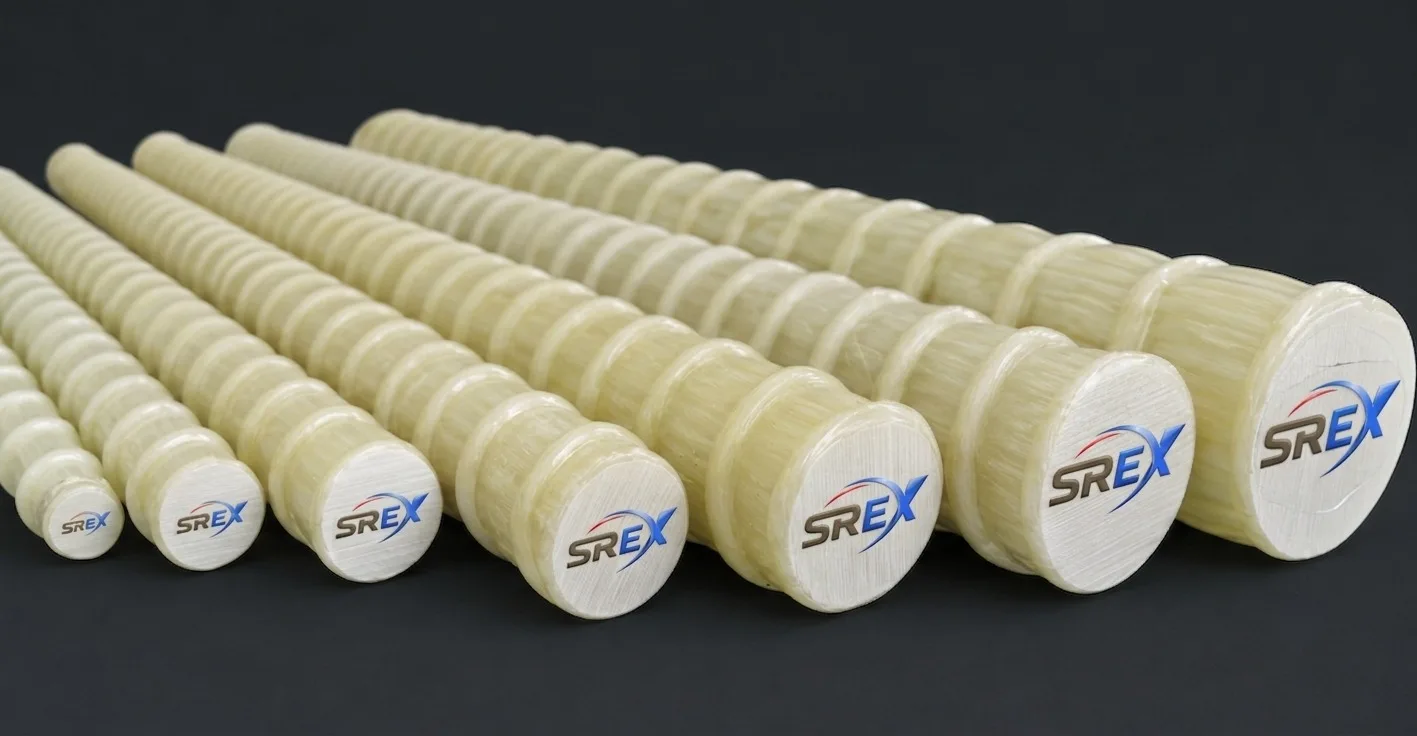
GFRP Rebars (Glass Fiber Reinforced Polymer Reinforcement Bars) are advanced composite reinforcement products developed as a corrosion-resistant alternative to conventional steel reinforcement. Manufactured through a continuous pultrusion process using high-strength glass fibers embedded in a thermosetting resin matrix, GFRP rebars provide exceptional tensile strength, lightweight handling, and long-term durability in aggressive environments where steel reinforcement is susceptible to corrosion.
Unlike conventional reinforcement steel, GFRP rebars are non-corrosive, non-magnetic, electrically non-conductive, and resistant to chlorides, chemicals, moisture, and environmental degradation. These properties make them highly suitable for infrastructure, marine, coastal, industrial, transportation, and water-retaining structures requiring extended service life and reduced maintenance costs.
SREX Composites Private Limited manufactures high-performance GFRP reinforcement bars engineered to meet demanding structural requirements while delivering superior lifecycle performance and sustainability benefits.
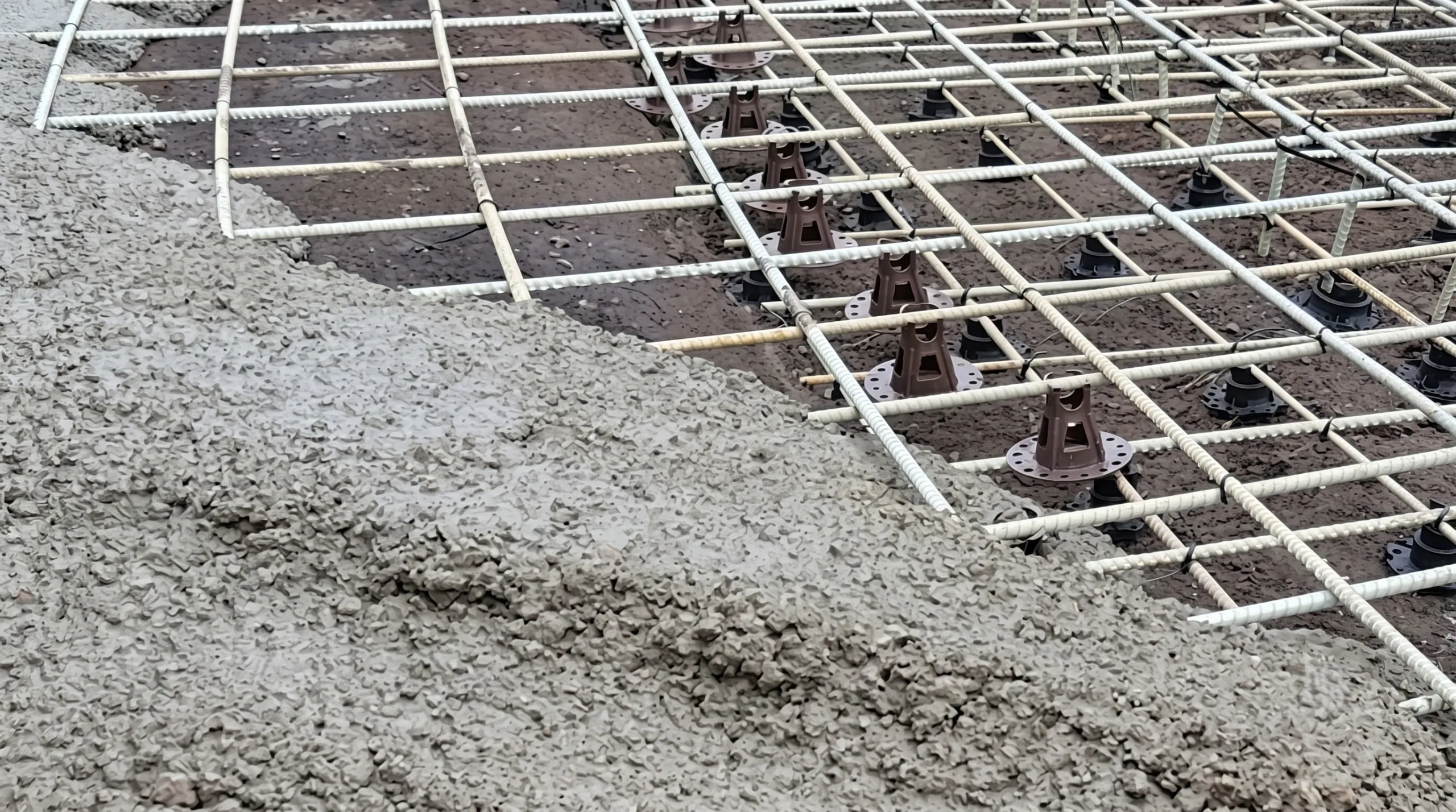
GFRP Rebars are composite reinforcement bars manufactured using continuous E-Glass or high-strength glass fiber reinforcements impregnated with specially formulated resin systems and formed through a controlled pultrusion process. The external surface profile is engineered to provide excellent bond strength with concrete, ensuring efficient load transfer and structural performance.
Due to their superior resistance to corrosion and environmental attack, GFRP rebars are increasingly specified in projects exposed to seawater, de-icing salts, aggressive chemicals, high humidity, and stray electrical currents. Their lightweight construction significantly reduces transportation and installation costs while improving site handling efficiency.
Compared to traditional steel reinforcement, GFRP rebars offer a substantially higher strength-to-weight ratio, enabling long-term structural durability without corrosion-related deterioration.
Applications
Advantages
Typical Product Features
Typical Industries Served
Design Standards & Engineering Basis
Applications
- Marine and coastal structures
- Bridges and flyovers
- Ports and jetties
- Seawalls and retaining walls
- Water treatment plants
- Desalination plants
- Chemical processing facilities
- Industrial foundations
- Tunnel and underground structures
- Metro and railway projects
- Highway infrastructure
- Precast concrete elements
- Parking structures
- Airport pavements
- Electrical substations
- Transmission and utility structures
- Water reservoirs and tanks
- Sewerage and wastewater infrastructure
Advantages
- Complete corrosion resistance
- High tensile strength-to-weight ratio
- Lightweight and easy handling
- Non-magnetic reinforcement system
- Electrically non-conductive material
- Resistant to chlorides and aggressive chemicals
- Reduced maintenance requirements
- Extended service life of concrete structures
- Improved durability in marine environments
- Lower transportation and installation costs
- High fatigue resistance
- Excellent dimensional stability
- Suitable for electromagnetic-sensitive installations
- Sustainable and long-life reinforcement solution
Typical Product Features
- Pultruded composite reinforcement construction
- Ribbed or sand-coated surface profile for concrete bonding
- High-strength glass fiber reinforcement
- Corrosion-resistant thermoset resin matrix
- Available in multiple diameters and lengths
- Custom cutting and project-specific supply options
- Suitable for precast and cast-in-situ concrete applications
Typical Industries Served
- Infrastructure and transportation
- Marine and offshore construction
- Water and wastewater treatment
- Industrial construction
- Power and energy projects
- Ports and harbor developments
- Chemical and process industries
- Municipal infrastructure projects
- Defense and strategic installations
Design Standards & Engineering Basis
GFRP Rebars are manufactured and evaluated in accordance with internationally recognized standards and engineering guidelines, including:
- ASTM D7957 – Standard Specification for Solid Round Glass Fiber Reinforced Polymer Bars
- ASTM D7205 – Tensile Properties of FRP Bars
- ACI 440.1R – Guide for the Design and Construction of Structural Concrete Reinforced with FRP Bars
- ACI 440.3R – Guide Test Methods for FRP Reinforcement
- CSA S806 – Design and Construction of Building Structures with FRP Components
- CSA S807 – Specification for FRP Reinforcement
- ISIS Canada Design Manual for FRP Reinforcement
- Relevant project-specific structural design requirements and specifications
Structural design is based on loading conditions, environmental exposure, concrete strength, reinforcement requirements, and service life objectives.
Why Choose GFRP Rebars Over Conventional Steel Reinforcement?
| Parameter | GFRP Rebars | Conventional Steel Rebars |
|---|---|---|
| Corrosion Resistance | Excellent | Susceptible to corrosion |
| Weight | Approximately 75% lighter | Heavy |
| Electrical Conductivity | Non-conductive | Conductive |
| Magnetic Properties | Non-magnetic | Magnetic |
| Chloride Resistance | Excellent | Poor |
| Maintenance Requirement | Very Low | Moderate to High |
| Service Life | Extended | Limited in corrosive environments |
| Transportation & Handling | Easy | More difficult |
SREX Advantage
SREX Composites Private Limited supplies engineered GFRP reinforcement solutions designed for long-term durability, structural reliability, and superior lifecycle performance. Our composite reinforcement systems help infrastructure owners, consultants, contractors, and EPC companies reduce maintenance costs while increasing the service life of critical concrete structures operating in challenging environments.